NISAR, the joint NASA-ISRO satellite, has sent its first radar images of Earth, showcasing agriculture, disaster response, and ecosystem insights.
A New Eye on Earth: NISAR Satellite Delivers Its Stunning First Images
A new age of Earth imaging has arrived. The NISAR (NASA-ISRO Synthetic Aperture Radar) satellite, the historic U.S.-Indian space agencies collaboration, has beamed back its initial stunning radar images of Earth. These first looks are a strong show of the satellite’s skill and a hopeful foretaste of the valuable data it will deliver as it arrives at full science operations later this year.
Launched by ISRO on July 30, NISAR will scan the Earth with unparalleled granularity. The information it collects will provide unprecedented actionable intelligence for decision-makers in an enormous variety of domains, from disaster response to agricultural management to critical infrastructure monitoring.
A Triumph of International Collaboration
These initial pictures aren’t simply a triumph of engineering — they are a historic accomplishment of global collaboration. The mission melds NASA and ISRO’s know-how to develop some of the most sophisticated Earth observation satellites ever constructed.
‘The successful capture of these first images from NISAR is a reminder of the power of partnership and collaboration — how two nations, on opposite sides of the world, can accomplish something great together, for the benefit of all,’ commented NASA Associate Administrator Amit Kshatriya. This collaborative spirit is key to addressing global challenges, beginning with comprehending our own transforming world.
Decoding the First Glimpses: My Journey from Coastal Maine to Dakota Farmland
The satellite’s L-band synthetic aperture radar (SAR), supplied by NASA’s Jet Propulsion Laboratory, imaged two very different but highly detailed locations within the United States.
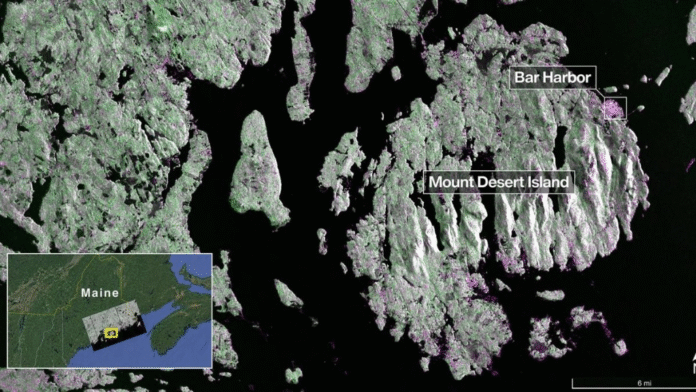
- Mount Desert Island, ME (Taken August 21) Here, this impressive image demonstrates NISAR’s capacity to capture ground separation with breathtaking resolution. Water shows up in blue-black, forests in green and hard surfaces such as buildings and bare earth in magenta. With sufficient resolution to resolve objects as small as 15 feet (5 metres), the image crisply delineates narrow waterways, and even small islets, underscoring its potential for monitoring coastal ecosystems and hydrology.
- North Dakota’s notice (Aug 23): Here, NISAR showcased its huge agricultural value. The picture paints farmland along the Forest River in bold relief. Darker plots signify lieow fields and lighter tones indicate cropsth as soybean and corn. The characteristic circular patterns of center-pivot irrigation systems are readily apparent, confirming the satellite’s usefulness in monitoring crop development and water management.
The power of radar: practical insights for a transforming world
These photos hauntingly demonstrate the magic of SAR. By distinguishing various land covers–from shrub to forest and urban areas–NISAR can construct an ever evolving portrait of our planet.
This capability is vital for:
- Ecosystem Monitoring — deforestation, health of wetlands, changes in biodiversity hotspots
- Agricultural Management: Giving farmers and policymakers accurate information on crop health and yield forecasts during growing seasons.
- Disaster Response: Assessing flooding, earthquake, or volcanic damage, even through clouds or darkness, to support emergency relief.
As NISAR approaches its operational ramp-up, these initial images are both a monument to mission triumph and a symbol of promise. They are the first of countless data streams that will enable us to more effectively conserve our home planet.
FAQ
When was the NISAR satellite launched?
The NISAR satellite was launched on July 30, 2025, by ISRO in collaboration with NASA.
What is the main purpose of NISAR?
NISAR’s main purpose is Earth observation, including disaster response, agricultural monitoring, forest mapping, and infrastructure tracking.
What makes NISAR images unique?
NISAR uses an advanced L-band Synthetic Aperture Radar (SAR) that can capture high-resolution images even through clouds, darkness, and dense forests.
Why is NISAR important for India?
NISAR will provide real-time data for floods, droughts, earthquakes, and crop monitoring, making it useful for both policymakers and farmers.
📢 Note to Readers
If you find any mistake or correction in this blog, please let us know.
👉 Contact: correction@searchmaro.in